

Why it matters
What happens to a fish after the strike
Four things decide how it eats, and all four happen in the first few minutes.
Lactic acid and early rigor
A fish that fights and then dies slowly burns its energy stores and builds lactic acid in the muscle, which lowers the pH, brings rigor mortis on early and leaves softer, gaping flesh. The FRDC iki jime leaflet puts it plainly: thrashing in air or a bucket reduces eating quality and storage life.
Blood left in the flesh
Blood that stays in the muscle oxidises and taints the flavour. Nofima's work on cod found residual blood rises with activity in the gear and with every minute before the fish is stunned and bled.
Rigor, delayed
Destroying the brain and then the spinal cord stops the muscle using up its energy stores. Measured on yellowtail kingfish and red sea bream, a snapper relative, full rigor was delayed 6 to 12 hours, and up to 12 to 19 hours in sea bream, compared with fish left to die.
Warm fish spoil fast
Bacteria work fastest in a warm fish. The GMRI chilling sheet says to get fish below 4°C as quickly as possible, and that a slurry cools a fish faster and more evenly than ice alone. Even brief warm spells shorten shelf life.
The order
Spike, bleed, wire, chill: in that order
The Yamagata fisheries guide and the Japanese method agree on the sequence. Each step protects the next.
Spike the brain first
Iki jime: a spike into the brain kills the fish instantly, before it can struggle. The fins flare for a second or two and the body goes limp. Within a minute of landing is the aim.
Bleed while the heart beats
Cut a gill arch and put the fish head-down in seawater. The heart pumps the blood out; a fish whose heart has stopped cannot be bled properly. Most of the blood is out in a few minutes.
Wire the spine
Shinkei jime: a wire pushed down the spinal canal from the tail cut or the head stops the nerve signals that keep burning energy. Optional, but it is where the rigor delay comes from.
Chill in a slurry
Into a salt-ice slurry for at least 30 minutes, until the core is cold, then onto ice in the bin. Bleeding first and spiking second lets the fish struggle and undoes most of the benefit.
Snapper
Snapper, step by step
Snapper have strong jaws and sharp dorsal and anal spines, so hold them with a wet rag or a glove.
Hold and spike
Lay the fish on its side. The brain sits just behind and above the eye, in the small soft spot toward the dorsal; angle the spike toward the eye and push, then wiggle it. Fins flare, then the fish relaxes. Still moving after two seconds means you missed.
Bleed
Lift the gill cover and cut through a gill arch, or cut the throat membrane under the gills. Head-down in a bucket of seawater or over the side in a bin of seawater for three to five minutes until the water stops colouring.
Wire, if you want to
Make a shallow cut across the top of the tail wrist to expose the spine, find the small hole above it and run the wire forward to the head. The fish twitches as the wire passes, then stops.
Slurry
Straight into the salt-ice slurry, whole, for at least half an hour. An Orca 25 or 35 L bin is a slurry for a day's snapper. Snapper are red fish: a long soak bleaches the skin and clouds the eyes, so move them onto ice once the core is cold.
Keep it whole
Whole and gutted keeps best. A fish that stays on ice, out of the sun and out of the meltwater, holds for days. Fillet at home, not on the boat.
Release the small ones
Snapper under 30 cm go back. NIWA found about 85% of released snapper survived when handled well: wet hands, no fingers in the gills or eyes, back in the water fast.
Kingfish
Kingfish, step by step
A kingfish is big, strong and keeps kicking. The ikijime.com kingfish page suggests a firm knock on the head to stun it before you spike.
Stun, then spike
Knock it on the head first. The brain is on top of the head, about two centimetres back from the eyes, between them: spike straight down and work the spike around until the body goes limp.
Bleed hard
Kingfish carry a lot of blood. Cut the gill arches on both sides and the throat, then hang it head-down over the side or in a big bin of seawater. Change the water once it is dark. Five to ten minutes.
Wire the spine
The tail-cut method works well on a fish this size: cut down to the spine at the tail wrist, find the canal above the bone and push the wire through to the head. This is the step that delays rigor by hours.
Cool it, whole
A whole kingfish needs a big slurry: an Orca 65 or 85 L bin takes a fish, seawater and ice. If it will not fit, pack salt ice in the gut cavity and around the body in a catch bag. Keep it out of the sun and off the hot deck.
Legal size and limit
Kingfish must be 75 cm, and the daily limit is three. Measure before you spike; one you are not keeping goes back with wet hands and the least time out of the water.
At home
Fillet once rigor has passed, or age the fish whole in the fridge on ice. Properly spiked, bled and wired fish are what Japanese sashimi grading is built on.
01 · Kill and bleed
Spikes, wires and gloves
The first minuteA stainless iki spike with a lanyard, a flexible spinal wire for shinkei jime, a cut-resistant glove for holding spiky fish, and a lip grip for the ones going back. Prices and stock are live.
- The mission
- Spike, bleed, wire
- Best for
- Iki spikeSpinal wireGlovesGrips


The slurry
The salt-ice slurry
How to mix it, from the GMRI sheet and the Boating NZ salt ice guide.
Two parts ice, one part seawater
Thick and pourable, like porridge or a lumpy thickshake, so the fish is in contact with ice all over. The FRDC leaflet says a minimum of two parts ice to one of water.
Salt ice, or add salt
Salt lowers the freezing point so the slurry sits around 0 to -1°C instead of 0 to 2°C. Salt ice from the servo does it; with fresh ice, add up to a cup of salt. Too much salt can freeze the flesh.
Half an hour to a few hours
At least 30 minutes until the core is cold. Whole fish can stay in a slurry for a day; gutted fish two to four hours. Boating NZ says 10 to 12 hours at most, then onto ice.
Then ice, not water
After the slurry, fish go into a bin or bag of ice with the meltwater drained. Fish sitting in water soften and take up water; fish on ice, out of the sun, keep.
Bin or bag
Which bin, or a bag?
What each does on a trailer boat. Sizes and ice retention are the makers' stated figures.
| Option | Holds | On the boat | At home |
|---|---|---|---|
| Orca 25 or 35 L bin | A day's snapper | The slurry bin for two: seawater, salt ice and the fish, with the drain for the meltwater. Orca rates the 25 L at 4 days of ice. | Drains and rinses; doubles as the picnic bin. |
| Orca 45 or 65 L bin | A good day, or a kingfish | Room for a whole kingfish in slurry, or a big snapper session. Anti-slip feet for the deck; a dry basket keeps the lunch out of the water. | Orca rates the 65 L at 7 days of ice. |
| Orca 85 L or 120 L wheeled | Overnight trips | The big slurry and the long weekend. The wheeled 55, 75 and 120 L roll to the boat loaded. | Up to 12 days of ice (120 L). |
| Kai Cooler 1000 or 1200 catch bag | Snapper; a kingfish in the 1200 | Stands upright, takes a slurry with the plug in, measure printed on the side, folds flat when empty. The bag for a small boat with no bin space. | Rinse and hang to dry. |
| Chill Again reusable ice | Top-up cold | No meltwater, so the fish stay dry. Pair it with salt ice for the slurry rather than instead of it. | Refreeze overnight. |
Capacities and ice retention from the makers' product pages. For a slurry you need room for ice, seawater and the fish; for the drive home, ice and a drain.
02 · The bin
Orca chilly bins
Our own rotomoulded bins, 15 to 120 LOrca rotomoulded bins from the 15 L day bin to the 120 L wheeled: T-latches, a rapid drain for the meltwater, anti-slip feet for the deck, and ice retention Orca rates from 4 days (25 L) to 12 days (120 L). The 25 and 35 L make a slurry for a day's snapper; the 65 and 85 L take a whole kingfish. Dry baskets and divider boards for each size are in the Orca collection. Prices and stock are live.
- The mission
- The slurry on the boat, the ice on the way home
- Best for
- SnapperKingfishSlurryDays away
Shop Orca bins
See more


03 · Bags and ice
Catch bags, other bins and ice
When a bag suits better than a binHutchwilco's Kai Cooler catch bags stand up on deck, drain, and have a fish measure printed on the side; they fold flat when the boat is small. Dometic's Cool-Ice bins and Chill Again reusable ice round out the range. Prices and stock are live.
- The mission
- Chill it fast, keep it cold
- Best for
- Catch bagsReusable iceRulers
Shop bags, bins and ice
See more


03 · At home
Filleting knives, sharpeners and boards
Finish the jobA flexible filleting knife for snapper, a longer stiff blade for kingfish, a scaler, and a sharpener so the edge is there every weekend. Prices and stock are live.
- The mission
- Fillet clean, waste less
- Best for
- FilletingScalingSharpening
Shop knives and sharpeners
See more- Best Seller

150mm - 205mm | Made in Japan
In stockFrom$3150Unit price /Unavailable -
- Best Seller
-

- best seller

- best seller

-


The rules
The rules that touch fish care
From the Fisheries (Amateur Fishing) Regulations 2013 and Fisheries NZ. Check the current rules for your area before you go.
Whole or gutted, or bled
Blue cod must be kept whole or gutted. Bleeding is allowed, but the rules define it as rapid blood loss that does not sever the spine or the throat under the gills, so no wire and no throat cut on blue cod.
Measure before you spike
A fish under the minimum size must go back immediately with all reasonable care for its survival. Snapper 30 cm, kingfish 75 cm. Iki a fish you cannot keep and you have broken the rule.
Fisheries (Amateur Fishing) Regulations 2013, regs 18 and 21
Give the small ones a chance
Wet hands, no fingers in the gills, back in the water quickly. Fish from more than about 20 m may need a release weight to get down past their swim bladder problems.
Some areas, every species
In the East Otago taiapure all finfish must be whole or gutted. Rules change by area and season: the Fisheries NZ app has the current ones.
Questions
Fish care questions
Short answers from the sources on this page.
Do I need to iki a fish, or is a knock on the head enough?
Both kill the fish quickly, which is the point. ikijime.com says a firm knock to the head before an ice slurry greatly improves snapper eating quality, and a knock is the easier first step on a kingfish. The spike is more certain, and it is the start of the shinkei jime method that delays rigor.
Can I just put the fish in the slurry alive?
The Australian animal welfare brochure allows an ice slurry as the kill method only for fish under about 500 g. Bigger fish should be knocked or spiked first, then bled, then put in the slurry.
Fresh ice or salt ice?
Salt ice makes a colder slurry, around -1°C, and lasts longer in the bin. Boating NZ suggests doubling the quantity if fresh ice is all you have. Either way, drain the meltwater and keep the fish on ice rather than in water.
How long can fish stay in the slurry?
GMRI says whole fish up to a day, gutted fish two to four hours; Boating NZ says move them to ice after 10 to 12 hours. A long soak bleaches red fish like snapper and clouds the eyes.
Should I gut the fish on the boat?
Gutting on the boat is fine for the fish and common practice; keep the carcass whole enough to measure. Blue cod are the exception: whole or gutted only, and bleeding must not cut the spine or throat.
What size wire for shinkei jime?
Spinal wires are typically 1 to 1.5 mm stainless, long enough to reach from the tail cut to the head: about 60 cm for snapper and 90 cm or more for a kingfish.
Where the figures come from
Sources
FRDC and ikijime.com
The Australian FRDC iki jime leaflet and Dr Ben Diggles' ikijime.com species pages for snapper and yellowtail kingfish, with X-ray brain positions.
Yamagata fisheries guide
Order of spike, bleed and wire, bleeding times and the seawater-ice chill, from the Yamagata Prefecture Fisheries Research Institute freshness guide (2023).
Fisheries Science 1996
Rigor delay figures for yellowtail and red sea bream from Ando et al. and Nakayama et al., Fisheries Science 62.
GMRI, Boating NZ, the regulations
Slurry ratios and temperatures from the GMRI 2026 chilling sheet and Boating NZ's salt ice article; the rules from the Fisheries (Amateur Fishing) Regulations 2013; release advice from NIWA and LegaSea. Checked October 2026.
Related guides
Keep reading
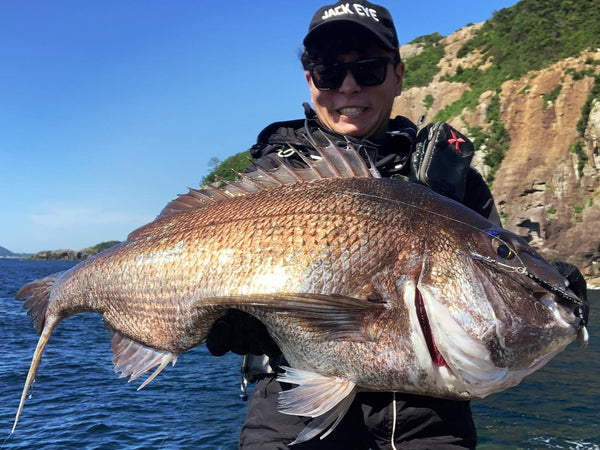
Softbaiting
Softbaiting guide
The rod, reel, braid, softbaits and jigheads that catch snapper in New Zealand, from a first setup to a technical one, rods and reels by budget, and how to fish them.
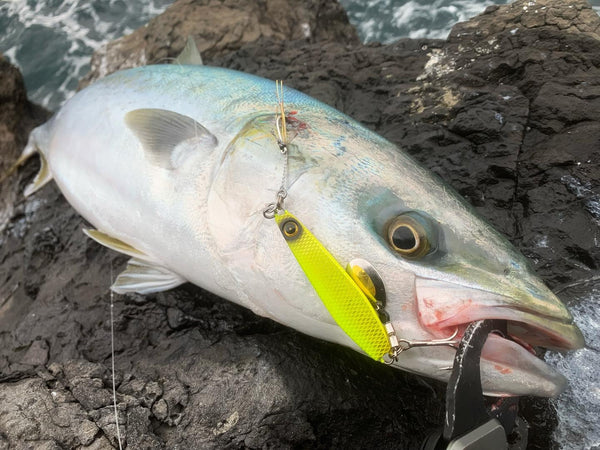
Jigging
Kingfish jigging guide
Mechanical jigging for kingfish: the knife jigs, short powerful rods, overhead and spin reels by budget, assist hooks, braid and the lift-and-wind rhythm.

Bottom fishing
Bottom Meat guide
Vexed's hybrid jig and bait rig for snapper, gurnard, hapuku and bluenose: the size for each fish, how to fish it on the drift, two videos, and the braid, leader and rods.

Storage
Meiho tackle system guide
Eight Versus Meiho boxes compared, accessories by job, four ready-made builds with one-click cart links, a compatibility matrix from Meiho's own fit lists and a system builder.